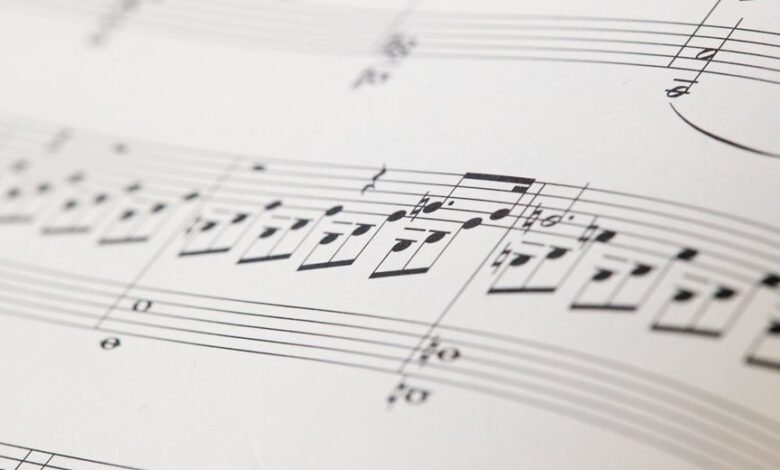
Understanding 6/8 Songs Made Easy presents a concise framework: two groups of three eighth notes create a dual-beat pulse with latent propulsion. The approach preserves triplet subdivisions while accommodating duplet counts, clarifying rhythm without锁ing phrasing. It surveys grooves, forms, and cadences that exploit two-triplet momentum and offers practical drills for sensorimotor alignment. The goal is a confident groove and adaptable timing, leaving a measurable gap for practitioners to test with real-world examples.
What 6/8 Feels Like and Why It Works
In 6/8 time, the compound meter partitions the beat into two groups of three eighth notes, creating a swaying momentum that both simulates and supports triplet-like subdivisions.
The feel yields a two beat feel with latent propulsion, guiding phrasing without rigid metrical lock.
This manifests as triplet swing, balancing angular clarity with flexible temporal expectation for listeners seeking freedom.
Counting and Pulse: Two Groups of Three in Practice
The 6/8 meter organizes tempo around two equal triple subdivisions, yielding a consistent pulse that listeners perceive as two main beats per bar.
In practice, performers apply counting patterns that emphasize the duple feel while preserving internal triplet subdivision, clarifying pulse grouping.
This approach supports rhythmic clarity, enabling flexible phrasing and expressive timing within a disciplined metrical framework.
Song Forms and Grooves That Use 6/8 Effectively
6/8 song forms and grooves capitalize on a compact duple feel built from two triplet subdivisions, yet employ diverse structural and rhythmic devices to sustain momentum and contrast. This analytic overview examines form choices, cadences, and groove construction that produce coherent tensions. Key concepts include syncopation basics and the distinction between swing vs. triplets, guiding effective 6/8 composition without exaggeration.
Quick-Start Exercises to Groove With Confidence
Quick-start exercises provide a pragmatic framework for developing groove confidence in 6/8 contexts. The approach emphasizes structured rhythm exploration, sample patterns, and metronome-guided subdivisions to reveal pulse stability. Each drill targets sensorimotor alignment, reducing hesitation and fostering deliberate timing choices. By isolating accents and motif repetition, performers build groove confidence while maintaining expressive freedom within a precise rhythmic scaffold.
Frequently Asked Questions
How Does 6/8 Differ From 3/4 in Feel?
6/8 vs 3/4 feel differs in pulse and groove: six-eight tends toward a rolling, compound meter with two main accents, creating a persistent momentum, while three-four provides a stately, subdivision-focused cadence; the feel shifts with emphasis and tempo.
Can 6/8 Be Used for Heavy Metal Grooves?
Yes, 6/8 can support heavy metal grooves, though it emphasizes swing and triplet feel. The approach relies on heavy metal phrasing, groove oriented accents, and tight rhythmic motifs to translate the meter into aggressive, precise articulation.
What Instrumental Roles Suit 6/8 Best?
In 6/8, instrumental roles favor layered rhythmic textures and dynamic groove accents, enabling piano, guitars, bass, and percussion to articulate plural textures while maintaining a steady swing. This approach favors analytic precision and expressive freedom.
How to Solo Over 6/8 Without Losing Pulse?
A striking 6/8 fact: two big beats per bar offer cross-rhythmic potential; soloing timing hinges on emphasizing the dotted-quarter pulse. This preserves rhythmic feel while exploring offbeat phrasing, avoiding pulse loss during melodic exploration.
Are There Common Notational Pitfalls in 6/8?
Common miscount and swing misalignment are frequent pitfalls in 6/8 notation; analysts note that explicit beat grouping and consistent subdivision reduce ambiguity, enabling performers to sustain pulse while preserving freedom in phrasing and expressive timing within compound meter.
Conclusion
In sum, understanding 6/8 rests on recognizing two triplet groups that drive a duplet-centered pulse beneath flexible phrasing. An analytic focus on internal triplet subdivision, rather than rigid metrical lock, clarifies groove discipline while preserving musical freedom. The method supports stable pulse, deliberate motif reuse, and adaptive timing across diverse repertoires. This framework, like a compass for rhythm, guides performers toward precise intention within a swaying, compound-meter landscape.