Structural Audit of Network Communication Channels – 3017153022, 6477666298, 1300185619, 7163130358, 3618277126

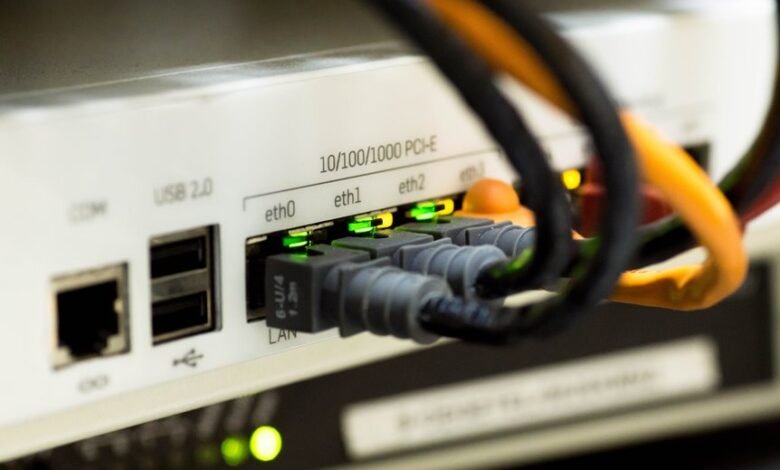
The structural audit framework evaluates network channels through taxonomy, topology, governance, and performance. It examines interface boundaries, data and control flows, and inter-device interactions to ensure predictable, secure exchanges. The approach assesses resilience, latency, and redundancy within governance-aligned controls. Findings aim to enable transparent, reproducible assessments that inform design choices toward efficiency, compliance, and accountable operating freedom across cross-boundary communications. The implications for ongoing validation point to critical decisions that warrant careful consideration as the evaluation progresses.
What the Channels Are and Why Structure Matters
Network channels are the conduits through which data flows between system components, and their structure determines how efficiently, reliably, and securely information is transmitted.
The analysis classifies channels via channel taxonomy, revealing distinct roles and capabilities.
Structural considerations include interface dependencies, boundary definitions, and interaction patterns.
Clarity in organization ensures predictable behavior, facilitating evaluation, maintenance, and informed design choices.
Assessing Topology, Routing, and Interconnections
Assessing topology, routing, and interconnections requires a systematic examination of how devices are arranged, how data paths are chosen, and how nodes communicate across boundaries.
The analysis emphasizes architecture, path selection criteria, and inter-device interfaces, focusing on data flow and control plane interactions.
Methodical evaluation reveals resilience, scalability, and coordination between components, enabling informed decisions on channel design and operational efficiency.
Security, Governance, and Compliance in Channel Design
Security, governance, and compliance considerations in channel design establish the formal controls and procedural frameworks that govern data exchange across network boundaries.
The analysis emphasizes Security governance as a structural discipline, aligning risk management with policy enforcement across interfaces.
Compliance alignment ensures auditable trails, standardized controls, and accountability, enabling transparent governance while preserving operatos freedom within established security parameters.
Performance Metrics: Redundancy, Latency, and Fault Tolerance
Redundancy, latency, and fault tolerance metrics provide the concrete measures by which channel design performance is evaluated after establishing governance and compliance frameworks.
The analysis emphasizes redundancy metrics and latency benchmarks, comparing architectures, failure scenarios, and recovery times.
Results quantify availability, mean time to repair, and rollback resilience, guiding objective improvements without bias, promoting freedom through transparent, reproducible assessments.
Frequently Asked Questions
How Often Should the Audit Scope Be Updated for Evolving Networks?
Audit scope should be updated periodically with network changes and governance demands, typically quarterly or after major deployments, ensuring alignment with network governance, data provenance, and evolving risk profiles. Continuous review supports proactive governance and accountability.
Which Stakeholders Must Approve Changes to Channel Architectures?
Stakeholder approvals from senior governance bodies are required for changes to channel architectures, ensuring compliance and accountability; such approvals formalize risk posture, budgets, and policy alignment, while preserving strategic autonomy and a measured, transparent modernization path.
What Is the Cost Impact of Adding Redundancy Layers?
The cost impact of adding redundancy layers varies with architecture; redundancy cost includes capital and operating expenses, affecting throughput and maintenance. It supports scalability forecasting, tradeoffs between resilience and efficiency, and aligns with governance and budgetary constraints.
How Are Hidden Interdependencies Between Channels Detected?
Hidden dependencies are uncovered by tracing data flows, documenting network topology, and simulating failure scenarios; this methodical approach reveals non-obvious interactions, enabling informed resilience decisions and optimized channel design without compromising operational freedom.
Can Audits Predict Future Scalability Constraints Reliably?
Audits cannot reliably predict future scalability constraints; they reveal current states. An anecdote shows a bridge’s stress test predicting overload, yet hidden loads emerge. Predictive metrics and modular scaling guide assessment, though uncertainty remains inherent and acknowledged.
Conclusion
The structural audit reveals that channel design, governed by taxonomy and topology, yields predictable data exchange and secure inter-device interactions. By evaluating interfaces, control flows, and resilience, the study aligns governance with measurable performance, ensuring redundancy and fault tolerance. Like a well-tuned orchestra, each component’s role harmonizes to minimize latency while maximizing reliability, transparency, and compliance across cross-boundary communications.